


Communication
Building Communication Skills at Home
Simple, effective strategies parents can use every day to encourage language development and reduce frustration.
Read Full Article
Leading Special Needs & Autism School in Kenya with Boarding Facilities
Inspiring Lives, Transforming Generations


Shakemu Gardens School aims to serve the diverse academic, physical, social and emotional needs of our students. All aspects of our curriculum and activities offer tailored programs, designed to assist individual learning styles to achieve success.
Comprehensive, evidence-based therapeutic support tailored to every child's unique needs.
Building communication skills and language development through personalized sessions. → Learn more
Helping children develop fine motor skills, self-care routines, and sensory processing abilities. → Learn more
ABA-informed behaviour intervention plans that promote positive behaviours in safe environments. → Learn more
Emotional and psychological support for children and families navigating the special needs journey. → Learn more
Specialized sensory rooms and activities designed to help children regulate sensory input for better focus and calm.
Every child learns differently. Our programs are designed around individual strengths and needs.
Critical early support from ages 2–6 that maximizes developmental outcomes. → Learn more
A nurturing introduction to structured learning, play-based discovery, and social readiness. → Learn more
Modified curriculum aligned with national standards, adapted for diverse learning profiles. → Learn more
Practical daily living skills including cooking, hygiene, money management, and community. → Learn more
Preparing older students for meaningful employment and independence through skills-based training programs.
We go beyond education — we build confidence, connection, and capability in every child.
Trained in autism, special education, and inclusive teaching methodologies.
Low student-to-teacher ratios ensure every child receives individual attention.
Individual Education Plans (IEPs) crafted for every student's unique goals.
Seamless blend of academics and therapeutic support throughout the day.
Secure, sensory-friendly spaces designed specifically for children on the spectrum.
Comfortable, structured boarding for children who need consistent 24-hour care and routine.
Our admissions team is available Monday–Saturday to answer your questions and guide you through the process.
Passionate professionals committed to transforming every child's potential.
Leads the institution with over 15 years of experience in special needs education, with a strong focus on inclusive learning systems. He is a passionate advocate for children on the autism spectrum, dedicated to improving access, dignity, and quality of support for every learner.
Brings 6 years of hands-on experience in special needs education, working closely with learners to support both academic and personal development. She is known for creating structured and supportive learning environments that help every learner reach their potential.
With 5 years of experience in special needs education, she supports learners using practical and adaptive teaching approaches. She is committed to building confidence and independence through patient and inclusive guidance.
A special needs teacher trainee with 2 years of growing experience in classroom support and learner interaction. She is steadily building strong skills in inclusive education and learner-centered assistance.
With 5 years in nursing assistance, she plays a key role in supporting patient care and daily health needs. She is dedicated to ensuring safety, comfort, and respectful care in every interaction.
A trainer with 5+ years of experience in music therapy training, helping people improve their mental health and emotional well-being through guided music and sound-based techniques.
Brings 6 years of caregiving experience focused on supporting individuals with daily living activities and emotional wellbeing. She is recognized for her compassionate approach and commitment to quality personal care.
Dedicated parents contributing to school governance and the holistic growth of our children.
Dr. Faith Mitheu is a disaster risk management and climate resilience specialist with experience in early warning systems, humanitarian programming, and water resource management. She has worked with regional and international organizations in strengthening disaster preparedness and community resilience across Eastern Africa.
As a parent to a differently abled child, she has self-trained herself on basic home-based support skills such as task breakdown and routine for ADLs, support therapy such as stretching and coordination games, communication skills and understanding individualized learning support. She is passionate about leadership, mentorship, community service, and supporting community-centered development initiatives. As a parent and professional, she is committed to contributing positively to school governance, collaboration, and the holistic growth and wellbeing of children.
CPA Purity Kaugi Charles is an accomplished accounting professional currently serving as an Accountant at the National Treasury. She is a Certified Public Accountant (CPA) with a strong foundation in financial management, accounting, budgeting, and public sector finance. Through her professional experience, she has contributed to promoting financial accountability, transparency and effective resource management in organizations.
As a parent of a child who is abled differently, she has developed practical skills in home-based support, task structuring, establishing daily living routines, and implementing supportive activities that improve social skills. She has also gained valuable knowledge in identifying the skills that interest such children and individualized learning approaches to support her child's development. She is passionate about interactions with children abled differently, community service, and initiatives that promote inclusivity and creating awareness in the community. Drawing from both her personal and professional experiences, she is committed to fostering collaboration, supporting effective school governance, and contributing to the holistic growth, inclusion, and wellbeing of children.
Mrs. Ann Waceke Nganga is a successful businesswoman in Nairobi's fast food industry and a devoted parent to Mark. Beyond her entrepreneurial achievements, she is a passionate philanthropist actively supporting orphans and vulnerable children across Kenya. Her commitment to community service and child welfare brings valuable perspective to school governance. Ann's business acumen and compassionate approach to supporting children with diverse needs make her an invaluable member of our parent board, dedicated to creating opportunities for every child to thrive.
Glimpses of joy, learning, therapy, and growth in our vibrant community.
Real voices from parents who have trusted Shakemu Gardens with their most precious ones.
Shakemu Gardens completely transformed my son's life. When he joined he could barely communicate. Today he speaks in full sentences and has friends. The team here is nothing short of miraculous.
The boarding facility gives me peace of mind knowing my daughter is in safe, loving hands around the clock. The structured routine has done wonders for her anxiety and daily functioning.
We tried several schools before Shakemu. None understood our child like this team does. They see the potential, not the label. My boy is thriving, learning, and most importantly — happy.
Practical resources to help you support your child at home and beyond.
Simple, effective strategies parents can use every day to encourage language development and reduce frustration.
Learn to recognize the difference and respond in ways that support your child's nervous system.
You cannot pour from an empty cup. Practical self-care strategies for the journey of special needs parenting.
Visual schedules, predictable transitions, and structured environments that help autistic children thrive.
Discover how specialised care, structured routines, and expert therapy in a boarding setting improve outcomes for children with ASD.
Early Intervention refers to specialized support services provided to children between the ages of 2 and 6 years who have been identified with developmental delays or autism spectrum disorder (ASD). This is the most critical period of brain development — the right support during these years can lead to dramatically better lifelong outcomes.
Research consistently shows that children who receive early, intensive, structured intervention make significantly greater progress in communication, social skills, and independence compared to those who begin intervention later. The earlier we start, the better the results.
At Shakemu Gardens, our Early Intervention program is designed around each child's unique profile — not a one-size-fits-all model. Every child is assessed and given a personalized plan that reflects their strengths, challenges, and family's goals.
We build foundational communication — from eye contact and pointing, to first words and two-word phrases. We use play-based speech therapy, visual supports, and where needed, AAC devices or PECS (Picture Exchange Communication System) to give every child a reliable way to communicate.
Using Applied Behaviour Analysis (ABA) principles, we teach new skills by breaking them into small, manageable steps. We reinforce positive behaviours consistently and address challenging behaviours through compassionate, structured strategies — never punishment or isolation.
Many children on the spectrum have sensory sensitivities — to sound, touch, light, or movement. Our occupational therapists use sensory integration techniques and our dedicated sensory room to help children regulate their responses and feel calm, focused, and ready to learn.
Through structured play, imitation games, and guided peer interaction, we teach the building blocks of social connection — making eye contact, taking turns, sharing, and recognizing emotions. These early social foundations are critical for lifelong wellbeing and friendships.
Fine motor skills (holding pencils, doing buttons, using cutlery) and gross motor skills (running, climbing, coordination) are developed through purposeful occupational therapy activities. Strong motor skills support independence, school readiness, and self-esteem.
Parents are essential partners in early intervention. We provide regular training, home programs, and coaching sessions so that learning continues beyond the classroom. A consistent home-school approach is one of the strongest predictors of success for children with ASD.
Early is always better. Contact us today to learn more or book an assessment visit for your child.
Our Preschool Program is designed for children aged 3 to 6 years who are ready to take the next step into a structured, joyful learning environment. It bridges the gap between early home-based intervention and formal schooling — providing children with the social, emotional, and academic foundations they need to thrive.
Our preschool classrooms are warm, vibrant, and deliberately designed to feel safe for children on the spectrum. Sensory-friendly materials, predictable routines, and small groups create a space where children feel comfortable enough to take learning risks and build genuine confidence.
Learning at this stage happens through play — purposeful, guided, structured play. Every activity — from painting to building blocks — is designed to develop a specific skill while allowing each child to experience the joy and fun that makes children want to come back to school each day.
Children are introduced to letters, sounds, and books through multisensory activities. Sandpaper letters, picture books, rhyming songs, and storytelling make early literacy engaging for diverse learners and lay the groundwork for reading.
Counting, sorting, patterns, and basic number concepts are taught through hands-on materials — beads, blocks, and visual aids — making abstract maths concepts concrete and accessible for children with different learning styles.
Guided peer play, circle time, and structured group activities teach children how to interact with classmates — taking turns, sharing, waiting, and navigating the social rules that feel natural to most but require explicit teaching for autistic children.
Outdoor play, movement activities, and physical education sessions develop coordination, balance, and body awareness. Active movement also helps children self-regulate, improving attention and readiness to learn in the classroom.
Art, music, and craft activities develop fine motor skills, creative expression, and sensory tolerance. These activities are also therapeutic — providing calming, motivating outlets that many children on the spectrum deeply enjoy.
Toileting, hand-washing, dressing, and eating independently are explicitly taught and practiced daily. These foundational independence skills are essential for a child's dignity, confidence, and readiness for a more formal school environment.
Our 2026 intake is now open. Contact us to book an assessment visit and learn more about placement.
Our Primary Learning Program serves students aged 6 to 14 years and is designed around the principle that every child can learn — given the right environment, the right support, and the right teacher. We follow a modified national curriculum, adapted to meet the diverse needs of our learners without compromising on ambition or expectation.
Every student in our primary program has an Individual Education Plan (IEP) — a personalized roadmap of their academic goals, therapeutic needs, and personal milestones. This is reviewed with parents every term and updated as the child grows and progresses.
Core subjects include Literacy (English and Kiswahili), Numeracy, Science, Social Studies, Creative Arts, and Physical Education — all taught using adapted materials, visual supports, and multi-sensory teaching strategies that make learning accessible to all.
Reading, writing, listening, and speaking skills are taught using phonics, sight words, picture books, social stories, and adapted text. Students progress at their own pace — from letter recognition through to reading independently — with every step celebrated.
From number recognition and counting through to basic operations, money, and measurement — maths is taught using concrete manipulatives, visual supports, and real-world contexts that make abstract concepts meaningful and achievable.
Children explore the natural world through observation, experiments, nature walks, and hands-on activities. Science learning develops curiosity, observation skills, and logical thinking — powerful strengths for many children on the autism spectrum.
Art, craft, music, and drama provide alternative channels for expression, communication, and achievement. Many of our students discover remarkable talent and confidence through creative subjects that a traditional school might deprioritize.
Structured physical activity supports motor development, body awareness, emotional regulation, and peer interaction. Swimming, dance, obstacle courses, and games are adapted to each child's physical abilities and sensory profile.
Lessons in identifying emotions, understanding others, conflict resolution, and friendship skills are woven throughout the school day — not taught as a separate subject, but embedded into daily interactions, circle times, and structured social activities.
Our team will assess your child and create an IEP tailored to their specific needs and goals before placement.
Our Life Skills Training Program is designed for students of all ages who need explicit, structured teaching of the daily living skills that most children pick up incidentally. For children on the autism spectrum, these skills — from making a cup of tea to crossing a road safely — often require patient, repetitive, step-by-step instruction.
Independence is not just a practical goal — it is deeply linked to dignity, confidence, and quality of life. A young person who can prepare their own meal, manage their hygiene, or take public transport has a fundamentally different future than one who cannot. These skills transform lives.
Life Skills are taught in real or realistic environments — our training kitchen, outdoor areas, and community trips — because skills learned in a classroom don't always transfer. We practice in the real world, with real materials, so that learning sticks.
Bathing, teeth-brushing, hair care, toileting, and dressing are taught through visual task cards, prompting hierarchies, and consistent daily routines. We work toward each child completing these independently, step by step, at their own pace.
Students learn to prepare simple, nutritious meals and drinks — from making tea and toast to preparing full dishes. Our training kitchen provides a safe, supervised space to develop practical food skills that promote independence and health.
Identifying coins and notes, understanding value, counting change, and making purchases at a shop are all practiced in real and simulated situations. Financial literacy is a critical life skill for community participation and independence.
Safe road crossing, using public transport, visiting a market or clinic, and understanding community rules are practiced through supervised community trips. We also teach safety awareness — who to trust, how to ask for help, and what to do if lost.
Sweeping, washing dishes, making a bed, doing laundry, and keeping a space tidy — chores build responsibility, motor skills, and the sense of contributing meaningfully to a household. These skills are essential for semi-independent or supported living.
For older students, we introduce basic work skills — following instructions, arriving on time, working alongside others, and completing a task. This vocational preparation opens doors to supported employment and meaningful participation in adult life.
Contact us to discuss how our Life Skills program can support your child's journey toward independence.
Communication is the foundation of everything — learning, connection, and independence. Many children on the autism spectrum experience significant challenges with speech and language. Some are non-verbal. Some have words but struggle to use them in social conversation. Some have fluent speech but find the social rules of communication confusing and exhausting.
Our qualified Speech-Language Pathologists (SLPs) at Shakemu Gardens assess each child's unique communication profile and design individualized therapy programs that target their specific areas of need — whether that's producing first words, building vocabulary, developing conversational skills, or learning to use an alternative communication system.
Speech therapy at Shakemu is never a one-size-fits-all service. Sessions are playful, motivating, and deeply child-led — because children learn best when they are engaged, interested, and enjoying themselves.
We work on understanding (receptive language) and using (expressive language) words, sentences, and concepts. This includes building vocabulary, following instructions, answering questions, and developing the ability to tell stories and describe experiences.
For children who are non-verbal or minimally verbal, we introduce AAC systems — PECS (Picture Exchange), sign language, communication boards, or high-tech speech-generating devices. Every child has the right to communicate, regardless of their speech level.
Many autistic children have words but struggle with the social use of language — knowing when to speak, how to start or end a conversation, understanding sarcasm, reading facial expressions, and staying on topic. These pragmatic skills are explicitly taught through role-play and structured social groups.
Some children have the words but find it hard to produce sounds clearly. We use targeted articulation therapy — sound drills, mouth exercises, and phonological awareness activities — to improve speech clarity so children can be understood by others.
Some children on the spectrum have feeding difficulties — extreme food selectivity, difficulty chewing, or oral sensitivities. Our SLPs work with children and families on oral motor exercises and gradual food exposure to expand diets and improve mealtime experiences.
Understanding and naming emotions is foundational to self-regulation and empathy. We use emotion cards, social stories, and role-play to help children identify how they feel, express it appropriately, and understand what others might be feeling.
Contact us to arrange a communication assessment and begin building your child's voice today.
Occupational Therapy (OT) helps children develop the skills needed for everyday "occupations" — the activities of childhood like dressing, eating, playing, writing, and going to school. For children on the autism spectrum, many of these seemingly simple activities can be profoundly challenging due to sensory processing differences, motor difficulties, or challenges with planning and sequencing.
Our occupational therapists at Shakemu Gardens assess each child's sensory profile, motor skills, and functional independence, then design targeted intervention programs that address their specific needs — whether that's learning to hold a pencil, tolerating different textures of food, or managing overwhelming sensory environments.
OT at Shakemu is hands-on, activity-based, and deeply practical. We work in our sensory room, our classroom, the dining hall, outdoors, and wherever the child's real-life challenges occur — because therapy that only works in a room doesn't really work.
We help children who are over-sensitive (finding touch, sound, or light overwhelming) or under-sensitive (seeking constant movement or pressure) to better regulate their sensory experiences — so they can be calm, focused, and present in the world around them.
Writing, cutting with scissors, doing up buttons, and using cutlery all require precise fine motor control. We build hand strength, coordination, and dexterity through targeted activities — playdough, bead threading, stacking, drawing — tailored to each child's level.
Balance, coordination, body awareness, and physical confidence are developed through movement activities, obstacle courses, ball skills, and outdoor play. Strong gross motor skills support independence, physical health, and participation in group activities with peers.
Dressing, toileting, bathing, brushing teeth, and eating are taught through careful task analysis and repetitive, supportive practice. We help children develop the independence to care for themselves with minimal assistance — a profound boost to their dignity and confidence.
Copying from a board, cutting along a line, and catching a ball all require the eyes and hands to work together. We assess and treat visual-motor difficulties through targeted activities that improve the connection between what a child sees and what their hands do.
Many meltdowns have sensory roots. We teach children to recognize their sensory triggers, use calming strategies, and access their sensory toolkit — weighted blankets, fidget tools, movement breaks — to self-regulate before reaching crisis point.
If your child struggles with sensory sensitivities, motor skills, or daily self-care, our OT team can help. Reach out today.
All behaviour — including what we call "challenging behaviour" — has a function. A child who hits, screams, or refuses to engage is not being naughty. They are communicating something: "I'm overwhelmed," "I don't understand," "I'm in pain," or "I need your attention." Our behaviour therapists are trained to understand the message behind the behaviour before designing any intervention.
We use evidence-based approaches rooted in Applied Behaviour Analysis (ABA) and Positive Behaviour Support (PBS). These frameworks focus on teaching children new skills to replace challenging behaviours — not simply eliminating behaviours through punishment or control.
At Shakemu, every child is treated with dignity. There is absolutely no use of physical restraint, punishment, isolation, or aversive techniques. Our approach is compassionate, trauma-informed, and deeply respectful of each child's autonomy and individuality.
Before any intervention begins, our therapists conduct a thorough assessment — observing the child, interviewing parents and teachers, reviewing records — to identify what is triggering the behaviour and what purpose it is serving. The function drives the plan.
Each child receives a written Behaviour Intervention Plan that identifies triggers, describes the problem behaviour clearly, proposes prevention strategies, and outlines how staff and parents should respond. Plans are reviewed every six weeks and updated as needed.
We identify what motivates each individual child and use those motivators to reinforce desired behaviours consistently. Reward systems are tailored — from sticker charts to token economies to preferred activities — always meaningful to the child they serve.
The best behaviour support prevents crises before they occur. We modify environments, adjust demands, offer choices, and build predictability to reduce the triggers that lead to challenging behaviour — making difficult moments less frequent and less intense.
When a child reaches crisis point, our trained staff use calm, safe, and respectful de-escalation techniques — low voice, reduced demands, safe space access, sensory calming tools. The goal is to help the child return to calm as quickly and safely as possible.
Behaviour strategies only work when they are applied consistently at home and at school. We provide regular training for both parents and staff, ensuring everyone responds to challenging behaviours in the same way — building predictability and security for the child.
You don't have to face it alone. Our behaviour team will work with your whole family to find solutions that work.
Raising a child with autism or a developmental disability is a profound journey — one filled with love, but also with exhaustion, grief, uncertainty, and countless challenges. At Shakemu Gardens, we believe that supporting the whole family is as important as supporting the child.
Our counselling services provide a safe, confidential, non-judgmental space where children, parents, and siblings can explore their feelings, process difficult experiences, and develop strategies for coping and flourishing. We are here not just for the hard days — but to help every family thrive.
Our counsellors are trained in autism-sensitive approaches and understand the unique emotional landscape of special needs families. We do not offer generic advice — we offer genuine partnership, compassionate listening, and practical support tailored to your family's situation.
Using adapted, creative methods — art, play, social stories, and visual tools — we help children on the spectrum express and process their emotions, navigate social challenges, develop self-awareness, and build the emotional vocabulary to communicate how they feel.
Parents of children with special needs often experience grief, burnout, isolation, and relationship strain. Our counsellors provide a non-judgmental space to process these feelings, develop coping strategies, and rediscover resilience. You deserve support too.
Receiving a diagnosis of autism or developmental disability is life-changing — for parents and siblings alike. We support families through every stage of acceptance: shock, grief, adjustment, and ultimately, the discovery of strength and new perspective.
Transitions — starting school, changing programs, moving to secondary, the death of a family member, a new sibling — can be destabilizing for children on the spectrum. We provide targeted support during major life changes to help children and families adjust.
Anxiety is extremely common in children on the autism spectrum. We use cognitive and behavioural strategies adapted for autistic learners — social stories, visual emotion charts, relaxation techniques, and calming plans — to help children understand and manage their anxiety.
Our facilitated parent support groups bring families together to share experiences, strategies, and encouragement. There is profound healing in realizing you are not alone. Groups meet monthly and are facilitated by our counselling team in a safe, welcoming environment.
Our counselling team is here for your whole family. Reach out today — asking for support is a sign of strength.
You are your child's first and most important teacher. These guides have been developed by our therapy and education team at Shakemu Gardens to give you practical strategies that you can use at home — today.
Turn chaos into calm with a simple picture-based routine your child can actually read.
Open GuideImagine waking up every morning with no idea what the day holds. No clock you can interpret, no predictable sequence, just a series of events that appear without warning. For many autistic children, this is daily life — and the anxiety it creates is both real and exhausting.
Visual schedules solve this problem elegantly. Instead of relying on verbal instructions your child may process slowly or incompletely, a picture schedule externalises the day — making time visible, predictable, and manageable. Research consistently shows that visual schedules reduce anxiety, decrease meltdowns, and increase a child's ability to transition between activities independently.
The best part? You do not need specialist materials to create one. What you already have at home is enough to get started today.
Start with morning, as this is often the most stressful part of the day. Photograph the actual objects and places in your home: your child's bed, the toilet, the bathroom tap, their breakfast bowl, their school bag, the front door. Sequence them in order and display them at your child's eye level.
Before introducing the schedule, walk through it with your child. Point to each picture and name the activity. The first few days, use the schedule as a reference — pointing to each picture as you move through the routine rather than sending your child to check it independently. Once familiarity builds, step back.
A simple after-school strip — arrive home, shoes off, snack, free time, dinner, bath, bed — can transform the fractious hours between school and sleep. Children who know what is coming are far more cooperative than children who are bracing for the unexpected.
Bedtime schedules are particularly powerful. Consistent sleep cues help regulate the nervous system and reduce the lengthy negotiations many families battle nightly. Bath, pyjamas, teeth, story, lights out. Five pictures. Laminated. Life-changing.
"A child who can see what comes next is a child who can relax into the present moment."
💡 At Shakemu Gardens, our therapy team creates personalised visual supports for every child. Ask us about our home schedule consultation — we are happy to help you build one that fits your family.
From first gestures to full sentences — practical tools that unlock your child's voice.
Open GuideOne of the first questions parents ask when a child is diagnosed with autism is: will my child ever speak? It is a question wrapped in love and longing. But it is also worth gently reframing: will my child be able to communicate? Because communication — the sharing of thoughts, needs, feelings, and connection — does not require speech. And for autistic children across every ability level, it is absolutely possible.
This guide meets your child wherever they are — non-verbal, using single words, building sentences, or somewhere in between — and offers approaches you can begin using at home, today.
The first goal is to build intentional communication — any reliable way your child can make a want or need known. This might begin with a reach, a gesture, an eye movement, or handing you an object.
PECS (Picture Exchange Communication System) teaches children to initiate communication by handing over a picture of what they want. Starting with highly motivating items, it gradually builds toward more complex requests and can be introduced at home with minimal materials.
Expand on what your child says rather than correcting or drilling. If your child says 'ball,' you say 'big ball' or 'kick the ball.' This technique, called expansion, models slightly more complex language without pressure.
Makaton signs are a simplified signing system used alongside speech that can bridge the gap between what a child wants to say and what they can currently produce verbally. Even a handful of signs — more, finished, help, eat, drink — can dramatically reduce frustration for both child and parent.
Responsive Communication is not a programme — it is an approach. It means following your child's lead, commenting on what they are doing rather than directing, and waiting warmly for them to respond in any way they can.
Reduce questions. 'What is that?' is harder to answer than 'Oh, a truck! A big red truck.' Commenting opens space; questioning often closes it.
Increase pauses. After you speak, wait. Count to ten silently if you need to. Many children need processing time that adults instinctively fill. The pause is an invitation — leave it open.
"Every child has something to say. Our job is to find the right door."
💡 Our Speech and Language Pathologists at Shakemu Gardens can assess your child's current communication level and create a personalised home programme. Contact us to find out more.
Behind most 'difficult behaviour' is a nervous system asking for help.
Open GuideMost of us learned about five senses in school: sight, hearing, smell, taste, and touch. But there are actually eight. The two you probably weren't taught are proprioception — the sense of where your body is in space, provided by your muscles and joints — and the vestibular sense — your sense of movement and balance, housed in the inner ear. The eighth is interoception: the sense of your internal body state, including hunger, thirst, temperature, pain, and the need for the toilet.
For autistic children, any or all of these senses can be either over-responsive (hypersensitive) or under-responsive (hyposensitive) — and the resulting experience of the world can be profoundly different from what neurotypical people assume.
A child who is over-responsive to sound may find a busy classroom genuinely painful — not metaphorically but physiologically overwhelming. A child who is under-responsive to proprioceptive input may crash into furniture, seek rough-and-tumble play, or want to wear heavy clothing because they literally need more sensory information to feel their body.
The child who covers their ears, refuses to eat textured foods, screams when their hair is brushed, or spins in circles for minutes at a time — these children are not misbehaving. They are communicating sensory needs.
Start by becoming a sensory detective. Keep a simple diary for one week, noting which environments or situations consistently trigger distress and which ones your child actively seeks out.
A child who seeks: tight squeezes, heavy blankets, chewing on objects, running and crashing — likely needs more proprioceptive input.
A child who avoids: crowds, unexpected touch, seam-heavy clothing, certain food textures, bright light — is likely over-responsive in those channels.
A full assessment by an Occupational Therapist can map this precisely and inform a personalised Sensory Diet. This kind of tailored insight is often what transforms a family's understanding of their child's behaviour from 'why is this happening?' to 'now I know exactly what to do.'
A Sensory Diet is not about food — it is a personalised schedule of sensory activities woven through the day to keep your child's nervous system regulated. Designed by an Occupational Therapist, it prevents the build-up of sensory overload that leads to meltdowns.
"When you understand the sensory world your child lives in, everything begins to make sense."
Food selectivity is extremely common in autistic children. This guide provides a step-by-step approach to expanding your child's diet using the "food chaining" method — without battles, force, or stress. Small, patient steps lead to big changes over time.
Small, patient steps can expand your child's diet — without battles, force, or stress.
If your child will only eat plain rice, three specific biscuits, and one brand of juice — and accepts nothing else without significant distress — you are not alone, and you are not doing anything wrong. Food selectivity affects a significant proportion of autistic children, with estimates suggesting up to 70% show some degree of restricted eating.
This is not pickiness in the conventional sense. It is often driven by sensory sensitivities to texture, colour, smell, temperature, or the mixed nature of foods — combined with the autistic brain's drive for sameness and predictability. Understanding this changes everything about how you approach it.
Forcing, bribing, or tricking a child with sensory-based food aversion rarely works and often makes things worse. When a child is forced to eat something their nervous system experiences as aversive, it creates anxiety around the entire eating experience — which can shrink the accepted diet further.
The goal is to build a positive, low-pressure relationship with food over time. And the best tool for this is food chaining.
Food chaining is a gradual, structured approach to expanding accepted foods by moving in tiny steps from something your child already accepts toward something new — with each step sharing properties with the last.
If your child eats plain salted crackers, the next step might be a different brand of salted cracker. Then a slightly different shape. Then a cracker with a mild flavour. Then a rice cake. Each link in the chain shares enough with the last that the nervous system doesn't panic.
This process can take weeks or months per food. That is normal. Celebrate every tiny step forward.
If your child's diet is so restricted that you are concerned about nutritional adequacy, or if mealtimes have become a source of daily crisis, please do not wait. A Speech and Language Pathologist or Occupational Therapist with feeding experience can conduct a full assessment and create a structured programme tailored to your child.
"Food is not a battle to be won. It is a relationship to be slowly, gently built."
💡 Shakemu Gardens' SLP and OT teams work together to provide feeding therapy for selective eaters. Contact us to discuss your child's specific needs.
Sleep difficulties affect up to 80% of children with autism — and exhausted parents means exhausted everyone. This guide explains why autistic children often struggle with sleep and provides a practical, gentle routine-based approach to improving sleep for the whole family.
Rest is not a luxury. For autistic children — and their families — it is medicine.
Up to 80% of autistic children experience significant sleep difficulties. If this is your reality, you already know what chronic sleep deprivation does to a family. What you may not know is why it happens — and why that understanding changes what you do about it.
Several biological and neurological factors make sleep genuinely harder for many autistic children. Melatonin — the hormone that signals to the body that it is time to sleep — is often produced later in the evening in autistic individuals, shifting the natural sleep window. Sensory sensitivities can make the bedroom environment uncomfortable in ways that are hard for children to articulate. Anxiety — which is highly prevalent in autism — is a powerful barrier to the kind of mental quietness sleep requires. And difficulty with transitions, including the transition from wakefulness to sleep, is common.
A consistent, calming bedtime routine is the single most evidence-based tool for improving sleep in autistic children. The routine should begin at the same time each evening, follow the same sequence, and last between 20 and 45 minutes.
A simple routine might look like: dinner, free play, bath with dimmed lights, pyjamas, teeth, visual schedule review for the following morning, story or calm activity, and lights out. The key is consistency. The routine itself is the cue that sleep is coming — the nervous system learns to expect and prepare for it.
Screens deserve special mention. The blue light emitted by devices delays melatonin production significantly. Aim for screens off at least one hour before bed, replacing them with physical books, puzzles, or quiet sensory play.
If your child wakes in the night and struggles to resettle, having a visual sleep card — a simple picture card beside the bed showing 'stay in bed, eyes closed, quiet body' — gives them something to orient to without needing to come to you.
For children who leave their room consistently, safe environments are essential. Door alarms, stair gates, and room monitors provide peace of mind while you work on settling skills.
If sleep difficulties are affecting your child's behaviour, learning, or health — or your own — please seek support. A paediatrician can rule out underlying medical issues. Our therapy team can help with sleep-specific behavioural strategies.
"A family that sleeps is a family with the resources to face whatever the day brings."
💡 Shakemu Gardens can support families experiencing sleep difficulties through our therapy team. Speak to our admissions team for more information.
Meltdowns are not tantrums. Understanding the difference — and knowing how to respond during and after a meltdown — is one of the most powerful things a parent can learn. This guide explains the meltdown cycle and gives you a practical, compassionate plan for the before, during, and after.
A meltdown is not a tantrum. Understanding the difference is everything.
When a child throws themselves to the floor in a supermarket, screams, bites their own arm, or becomes inconsolable in response to what appears to be nothing — it looks, to the outside world, like a child who is out of control and a parent who cannot manage them.
It is neither of those things.
A meltdown is the result of a nervous system that has been pushed beyond its capacity to cope. It is not goal-directed. The child is not trying to get something, avoid something, or manipulate the situation. They have lost the ability to regulate — and they need a very different response from a parent than a behavioural tantrum does.
Understanding the meltdown cycle gives you the power to intervene early — and to respond effectively when early intervention is not possible.
The Rumble Stage is where the meltdown begins to build. Warning signs are subtle but visible once you know to look for them: increased stimming, rigidity, withdrawal, changes in breathing, louder or quieter than usual, resistance to requests they would normally accept. This is the stage where intervention is most effective.
The Rage Stage is the meltdown itself. The nervous system is overwhelmed. The child cannot process language, reason, or respond to consequences. This is not the time for discipline, explanations, or lengthy reassurance. It is the time for safety and stillness.
The Recovery Stage follows the peak. The child is exhausted and may feel shame or confusion. Comfort and connection are what's needed — not a debrief about the behaviour, not consequences, not 'we need to talk about what just happened.'
Once your child is calm, offer physical comfort if they want it. Provide quiet and space if they need it. Do not rush a conversation. If your child can communicate about what happened, a gentle, curious conversation a little later can help identify triggers — but only when they are fully settled.
Track your child's meltdowns in a simple diary: time, location, what happened before, what seemed to trigger it. Patterns emerge quickly — and patterns can be addressed. Reducing sensory load, building predictability, teaching emotional regulation skills, and ensuring your child's basic needs (sleep, food, movement) are met are all powerful preventative strategies.
"They are not giving you a hard time. They are having a hard time."
💡 Shakemu Gardens' therapy and education teams work directly with families on meltdown prevention and response strategies. Contact us to find out how we can support your family.
Caregiver burnout is real and it affects your ability to care for your child. This guide — written with honesty and compassion — helps you identify burnout, create realistic self-care habits, access support, and rebuild your own emotional reserves. You matter too.
You cannot pour from an empty cup — and you deserve to be full.
Parenting a child with special needs is one of the most demanding things a human being can do. The love is immense. The commitment is total. And the cost — to your energy, your sleep, your social life, your sense of self, your relationship, your mental health — is real, significant, and rarely talked about honestly.
This guide is not going to offer you platitudes. It is going to name what is hard, acknowledge what it costs, and then offer practical, honest strategies for sustaining yourself — because you matter, and because your child needs you to.
Caregiver burnout is not weakness. It is what happens when a person gives more than they receive, for too long, without adequate support. Signs include: chronic exhaustion that sleep does not fix, emotional numbness or detachment, increasing resentment, physical symptoms with no clear medical cause, and a persistent sense of loss — of the life you expected, of the person you were before.
If any of this sounds familiar, you are not broken. You are depleted. And depletion can be addressed.
Self-care is not spa days and scented candles (though those are fine if they help). For caregivers, it is the unglamorous, consistent work of keeping yourself functional and human.
It looks like: going to your own doctor's appointment instead of cancelling it. Eating a proper meal. Saying no to one extra commitment this week. Sleeping when you can. Asking for help and accepting it when offered.
If you are experiencing persistent low mood, anxiety, disconnection from your child, or thoughts of harming yourself, please seek professional support. You deserve care as much as your child does. Therapy, counselling, peer support, and respite care are not luxuries — they are tools for sustaining the most important relationship in your child's life: the one with you.
Grief is also a legitimate part of this experience. Grief for the diagnosis, for the life you planned, for your child's pain. This grief does not make you a bad parent. It makes you human, and it deserves to be honoured.
"Caring for yourself is not separate from caring for your child. It is essential to it."
💡 Shakemu Gardens understands that parent well-being is part of child well-being. Ask our team about parent support resources and family services available through the school.
Starting a new school or moving between programs is a major transition for autistic children. This guide helps parents prepare their child using social stories, visit schedules, sensory preparation, and communication strategies — reducing anxiety for both child and parent before the first day.
The right preparation turns a terrifying first day into a confident first step.
For autistic children, transitions are not merely changes — they are ruptures. The familiar becomes unfamiliar. The predictable is replaced by the unknown. And the neurological cost of adapting to a new environment can be enormous, even when the change is positive.
Starting school, moving between programmes, or transitioning to a new class is one of the most significant changes an autistic child will face. But with thoughtful preparation and enough lead time, it is also one of the most manageable.
Preparation for a September school start ideally begins in May or June. This is not excessive — it reflects how long it takes for an autistic child to build genuine familiarity with a new environment.
Begin with photographs. Take pictures of the school entrance, the classroom, the bathroom, the playground, the teacher, the lunch area, and any other key spaces. These images become the building blocks of everything else.
A Social Story is a short, personalised narrative that walks a child through a new situation in simple language. Written in first person ('I will walk through the blue gate. My teacher's name is Mrs Wanjiru. My peg has the star.'), it uses photographs to narrate the school day step by step.
Read the story together daily from four to six weeks before school begins. The familiarity builds a cognitive map of what to expect — so when the day arrives, the child's nervous system recognises it.
Have your child wear their new school uniform at home in the weeks before — during low-stress activities. This removes one variable from the first day. If the school has particular sensory features (echoing halls, noisy playgrounds, fluorescent lighting), discuss accommodations with the school team in advance.
Pack a sensory kit: a preferred sensory toy, noise-reducing earbuds if needed, and a photograph of home that can provide comfort during difficult moments.
Keep the home routine as normal as possible. A visual schedule for the morning is helpful. Arrive a little early so the school is not yet crowded. Say goodbye clearly and briefly — extended or anxious farewells are harder for children to recover from than clean, confident ones.
"Preparation is not overprotection. It is the greatest gift you can give a child facing something new."
💡 Shakemu Gardens works closely with families during every school transition. Our team provides transition support plans, school readiness assessments, and liaison with receiving schools. Contact us to find out how we can help.
Our therapists and teachers are available for parent consultations. Get personalized advice for your specific situation.
Answers to the questions parents ask most often about Shakemu Gardens School.
 June 10, 2026
Join us for our annual open day — visit classrooms, meet the team, and connect with other families on the same journey.
 May 20, 2026
We are proud to celebrate 12 students who completed our vocational preparation program and are ready for the next chapter.
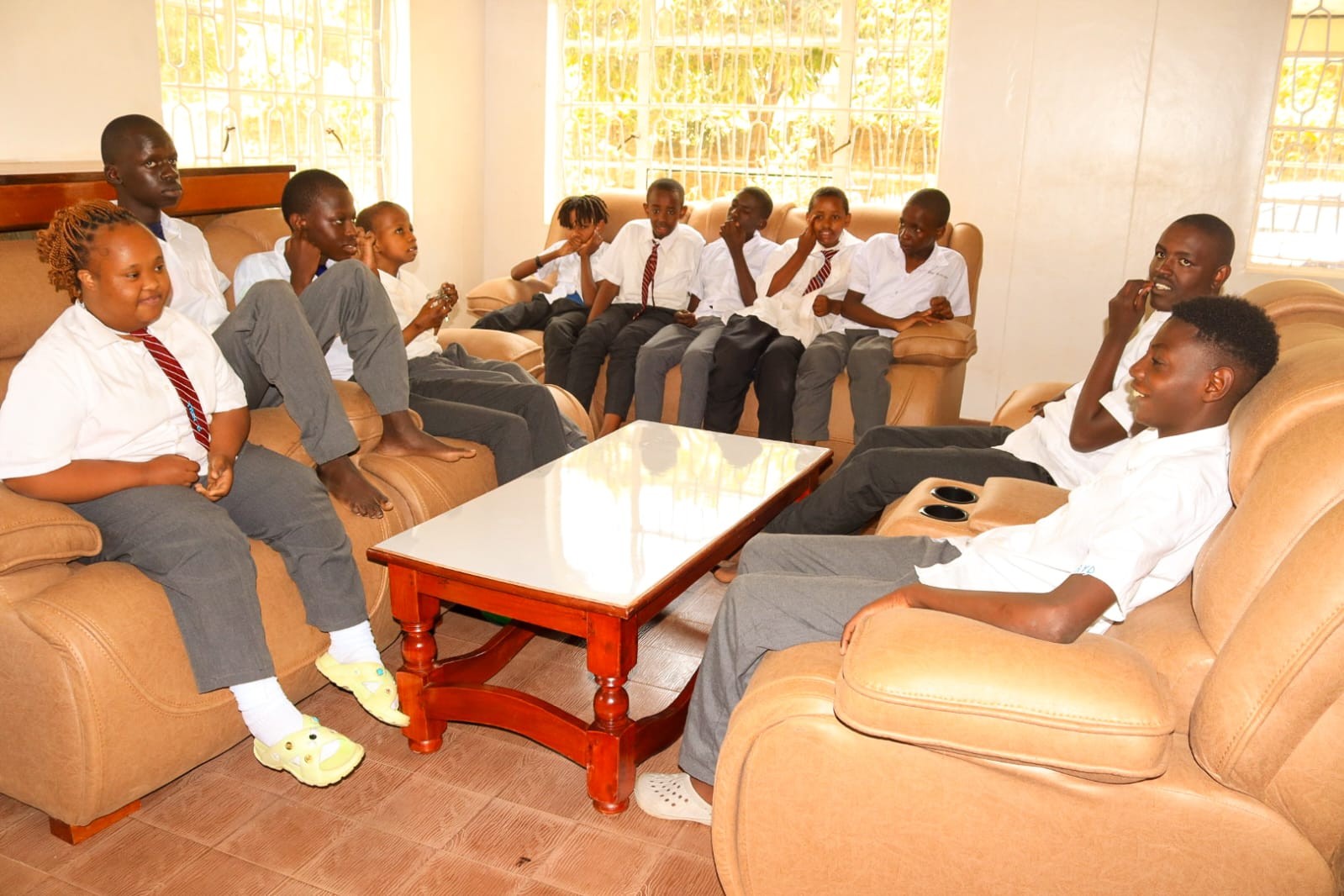 Apr 15, 2026
Our state-of-the-art sensory integration room is fully operational — a calming, enriching space for all our learners.
Every child deserves the opportunity to learn, grow, and reach their full potential. Your support helps Shakemu Gardens School provide specialized education, therapy services, life-skills training, meals, boarding care, and learning resources for children with diverse learning needs.
Make a lasting impact by sponsoring a child's education, therapy, and care. Your monthly contribution provides comprehensive support for a child's journey.
Your one-time or recurring donation helps us continue providing quality education and care. Every contribution makes a difference in a child's life.
Your information is protected with industry-standard encryption. We comply with data protection regulations.